Introduction

Introduction

Introduction

India's magic culture is one of the oldest performing art traditions in the world, yet today, it stands on the verge of disappearing. Jaadunama is a response to that silence. A large-scale cultural event brand designed to revive and reposition Indian magic as a contemporary performing art, deserving the same institutional respect this country gives its music, dance, and cinema.

India's magic culture is one of the oldest performing art traditions in the world, yet today, it stands on the verge of disappearing. Jaadunama is a response to that silence. A large-scale cultural event brand designed to revive and reposition Indian magic as a contemporary performing art, deserving the same institutional respect this country gives its music, dance, and cinema.

Client

Graduation Project

Services

Brand Identity Design

Year

Jan-April 2026

Industry

Magic & Entertainment

Client

Graduation Project

Services

Brand Identity Design

Year

Jan-April 2026

Industry

Magic & Entertainment

Why?

Why?

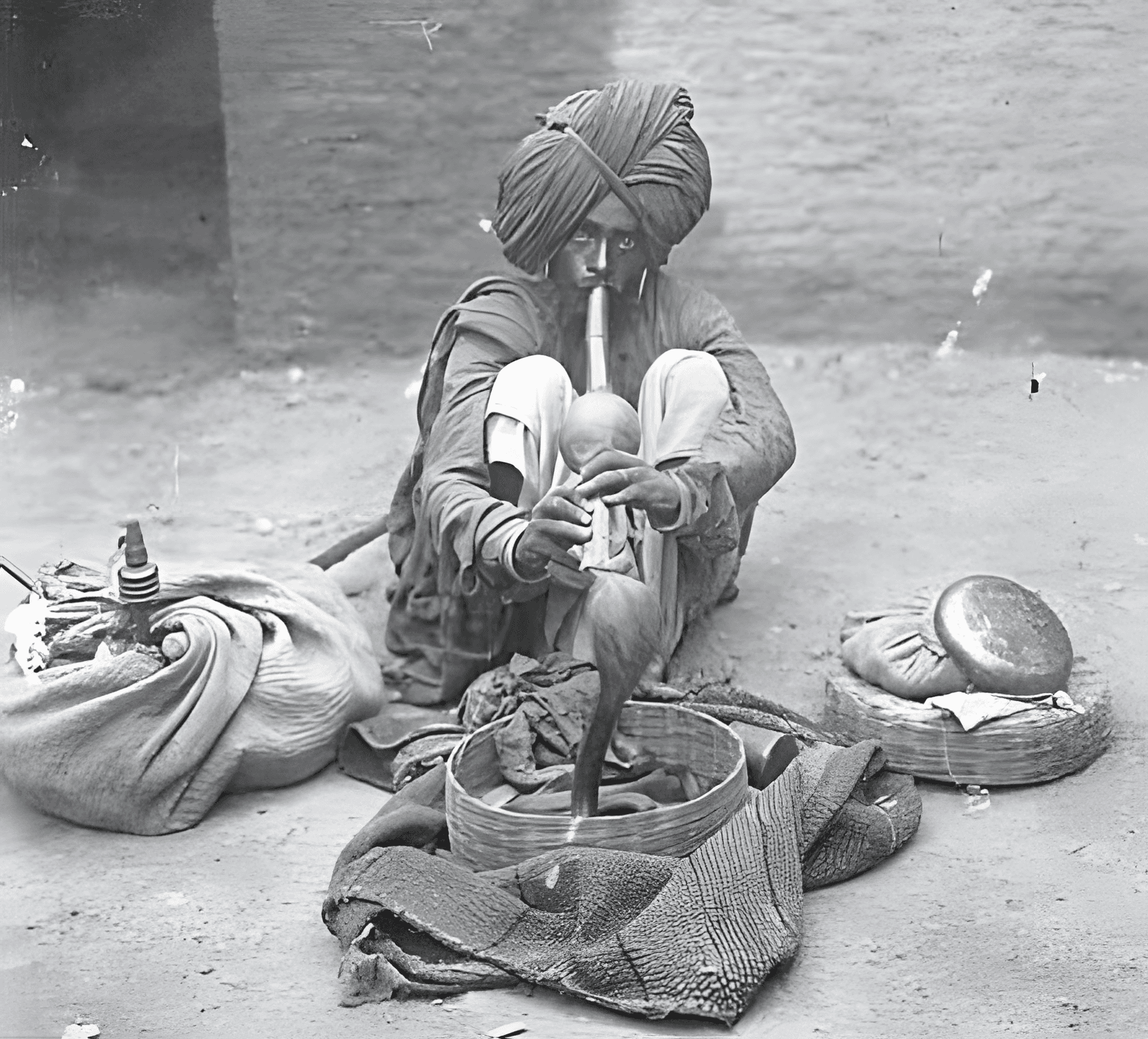
India was once the birthplace of wonder. For centuries, jaadoogars performed in temple courtyards, bazaars, and village fairs, blending theatre, ritual, and belief into acts that left audiences breathless. Today, India's magic culture survives in fragments, a fading memory in the very country that gave the world some of its most extraordinary illusions.

India was once the birthplace of wonder. For centuries, jaadoogars performed in temple courtyards, bazaars, and village fairs, blending theatre, ritual, and belief into acts that left audiences breathless. Today, India's magic culture survives in fragments, a fading memory in the very country that gave the world some of its most extraordinary illusions.

History of Indian Magic

History of Indian Magic

In India, magic has never been just entertainment. It has been philosophy, politics, religion, and rebellion, one of the longest unbroken threads in Indian cultural history. It begins thousands of years ago, in the same texts that gave us yoga and meditation. What India is losing isn't a party trick. It's a piece of its civilizational identity.

In India, magic has never been just entertainment. It has been philosophy, politics, religion, and rebellion, one of the longest unbroken threads in Indian cultural history. It begins thousands of years ago, in the same texts that gave us yoga and meditation. What India is losing isn't a party trick. It's a piece of its civilizational identity.

In India, magic has never been just entertainment. It has been philosophy, politics, religion, and rebellion, one of the longest unbroken threads in Indian cultural history. It begins thousands of years ago, in the same texts that gave us yoga and meditation. What India is losing isn't a party trick. It's a piece of its civilizational identity.

Vedic Era (~1500 BCE)

Vedic Era (~1500 BCE)

The Vedic Roots - Magic as Philosophy

The Vedic Roots - Magic as Philosophy

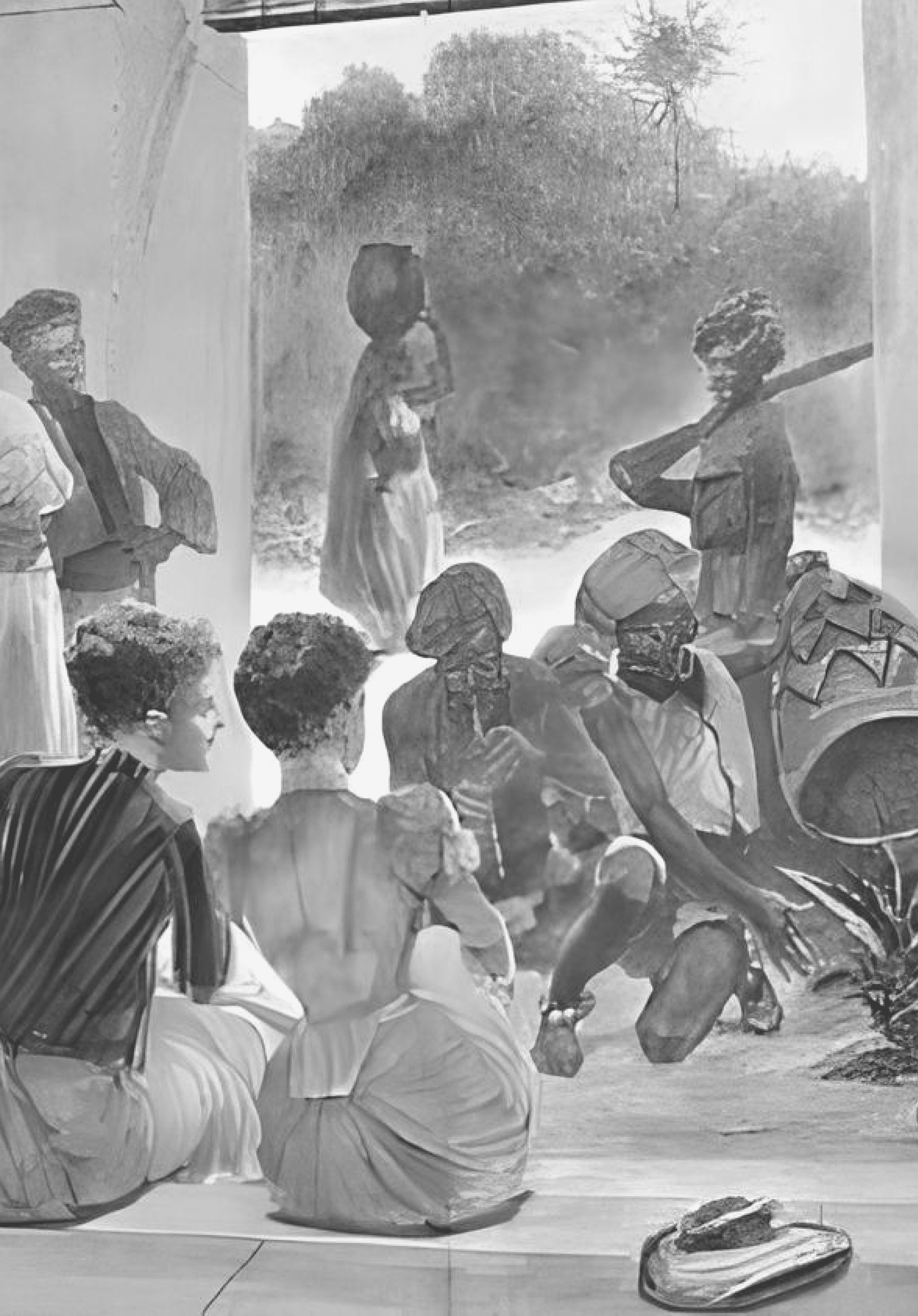
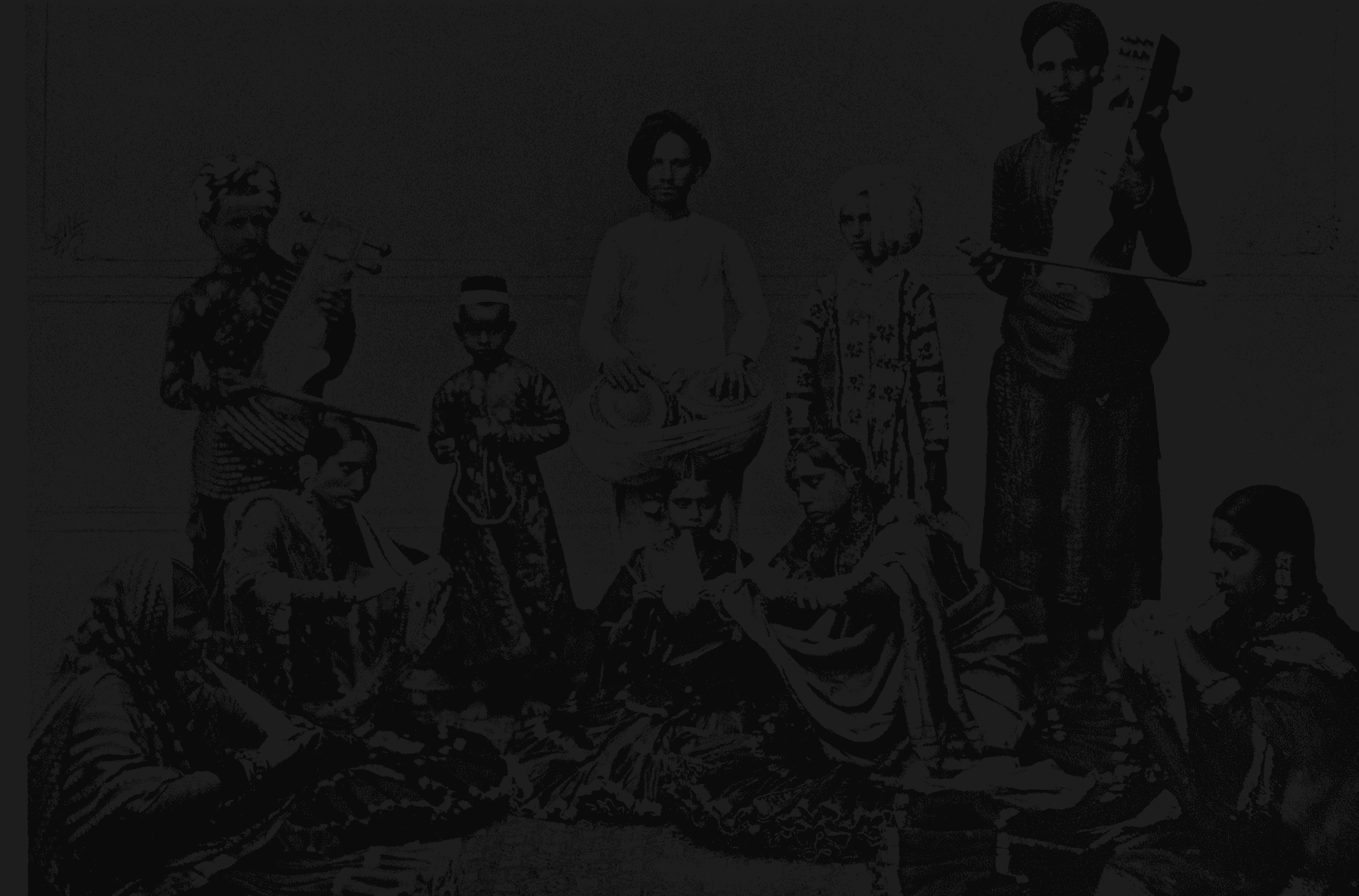
Long before magic was entertainment, it was an idea. In the Vedic tradition, Maya described the fundamental illusion of the material world, the philosophical position that reality is layered, and what you perceive is not the whole picture.


Indra, king of the gods, was its first master, the weaver of the Indrajaal, literally "Indra's net", the web of illusion that held the universe together. The word eventually became the Sanskrit term for magic itself. In the West, a magician tricks you. In India, the universe tricks you, and the magician is just reminding you of that fact. That distinction is everything.

Long before magic was entertainment, it was an idea. In the Vedic tradition, Maya described the fundamental illusion of the material world, the philosophical position that reality is layered, and what you perceive is not the whole picture.


Indra, king of the gods, was its first master, the weaver of the Indrajaal, literally "Indra's net", the web of illusion that held the universe together. The word eventually became the Sanskrit term for magic itself. In the West, a magician tricks you. In India, the universe tricks you, and the magician is just reminding you of that fact. That distinction is everything.

Mughal Era (~1600s)

Courts, Empires, and Patronage

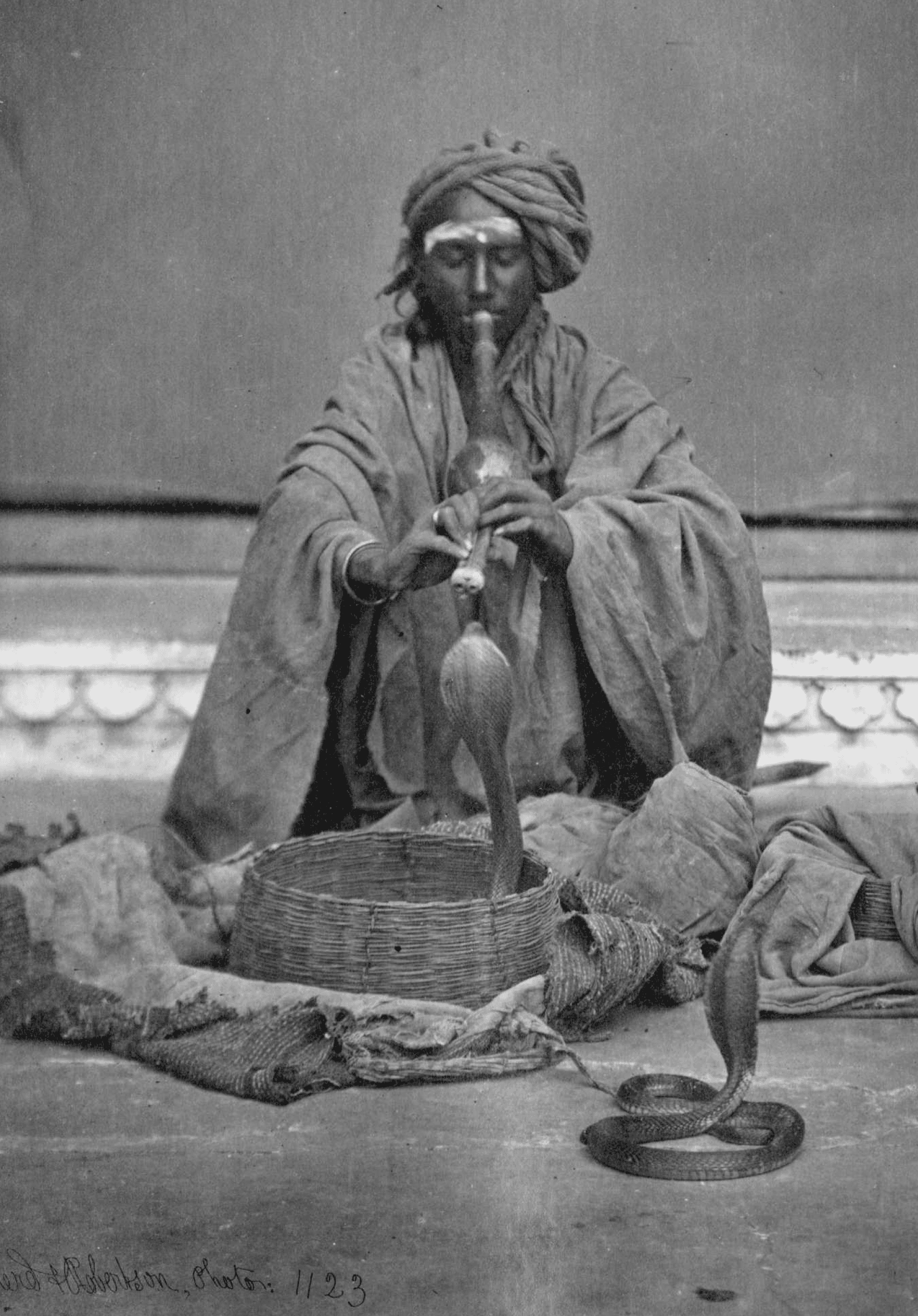
Kautilya's Arthashastra, written around the 4th century BCE, recommends the use of magicians as spies. A magician could enter any space and nobody would suspect him because everyone was watching the trick. Magic was a tool of statecraft, sitting alongside diplomacy and warfare.


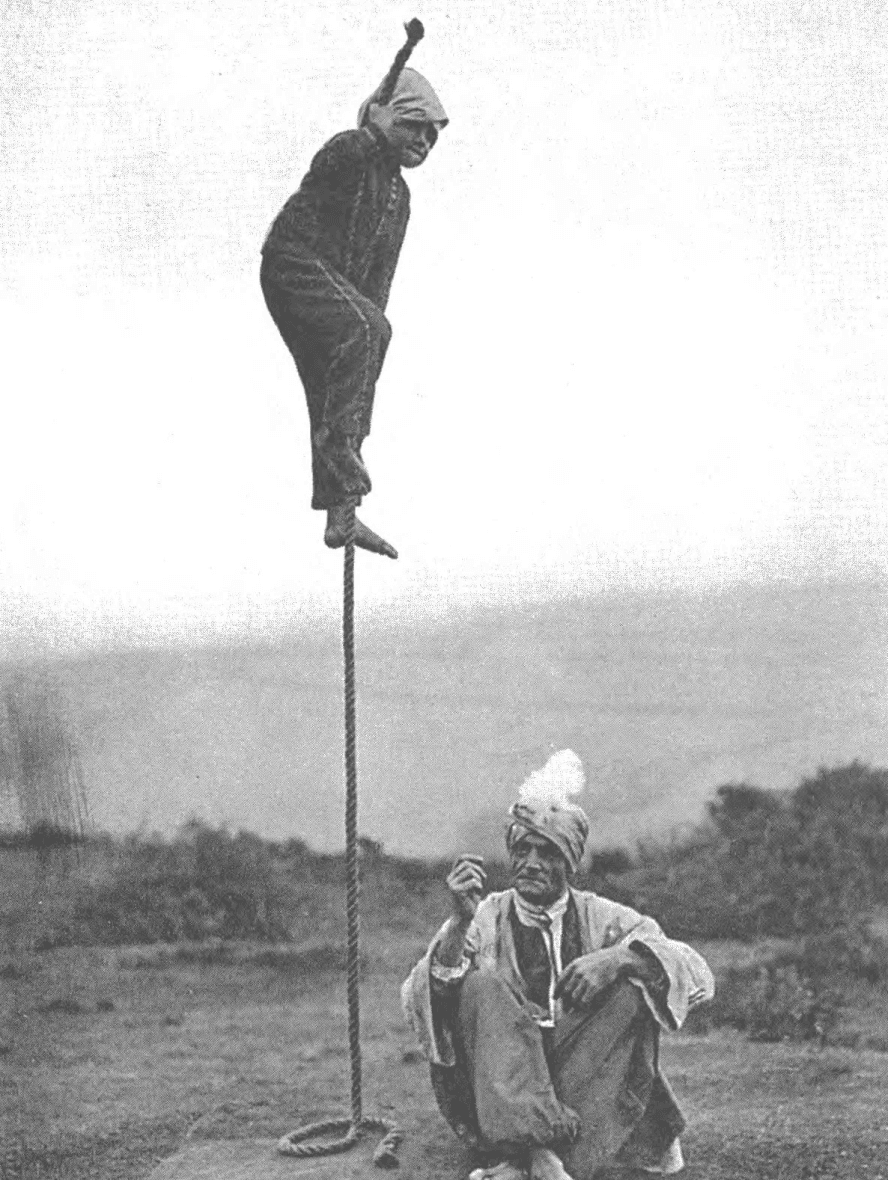
By the Mughal period, the relationship had shifted entirely. Jadoowallahs were no longer operatives, they were celebrated artists, patronised alongside poets and painters. Jahangir himself wrote in his personal memoirs about being completely stupefied by the Indian rope trick.

Colonial Era (1800s - 1947)

Colonial Wound &

The Decline of Street Magic

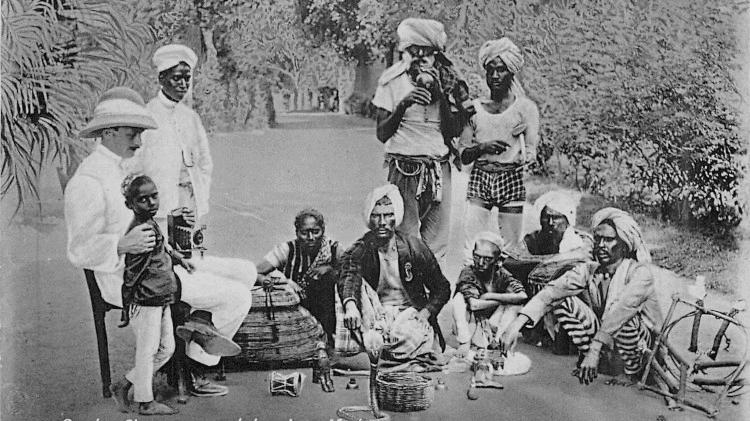
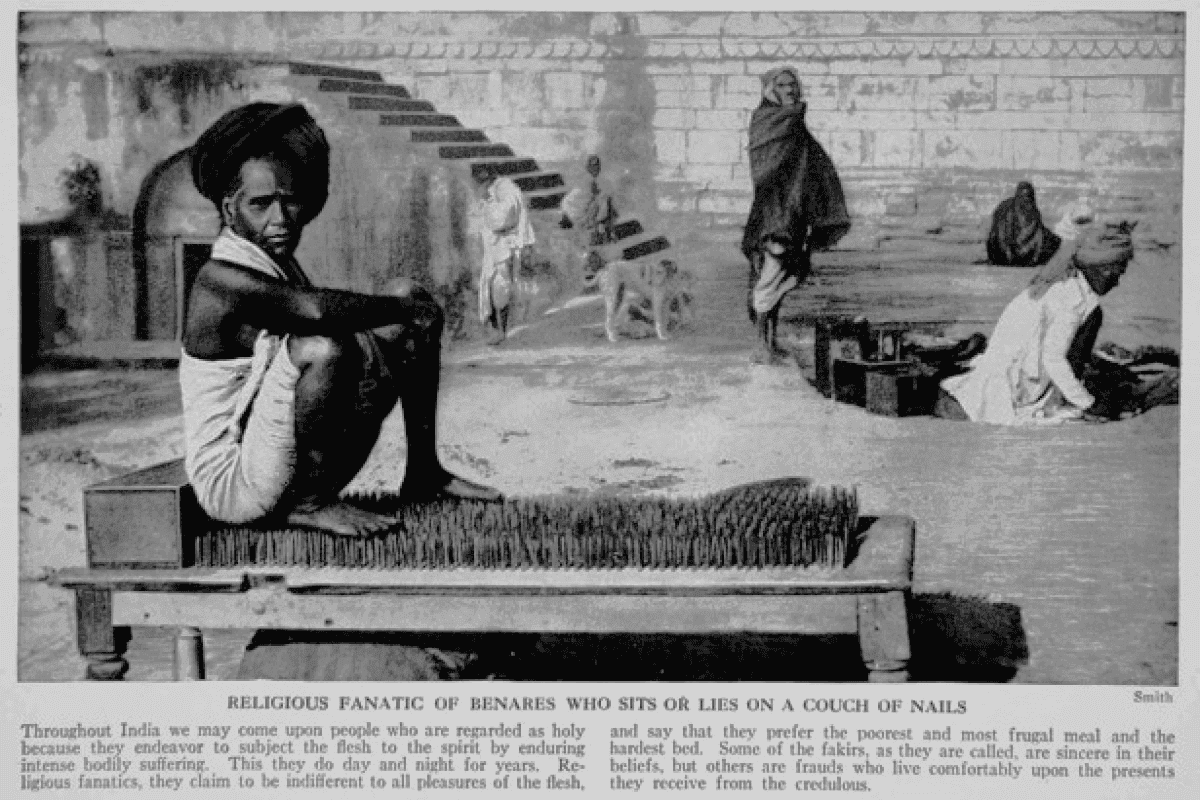
Everything changed the moment the British arrived. Their damage to Indian magic was perceptual. Western magicians stole freely from Indian jadoowallahs: Houdini performed as a "Hindu Fakir," Thurston travelled to India to study techniques he rebuilt, and dozens of others adopted fake Indian personas.


Meanwhile, the britishers labelled entire jadoowallah communities as "criminal tribes", not criminals, but performers whose only crime was working on a street corner. This created a hierarchy that never fully disappeared. Western stage magic was framed as clever and scientific. Indian street magic was branded as primitive and superstitious.

Post Independence (1950s-90s)

Post-Colonial India

& PC Sorcar’s Legacy

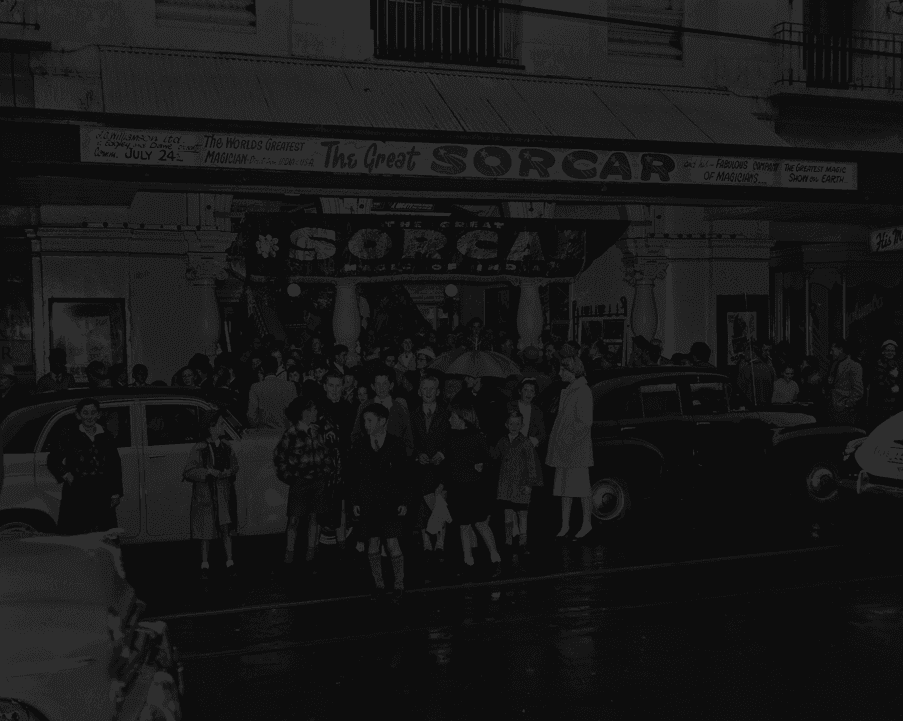
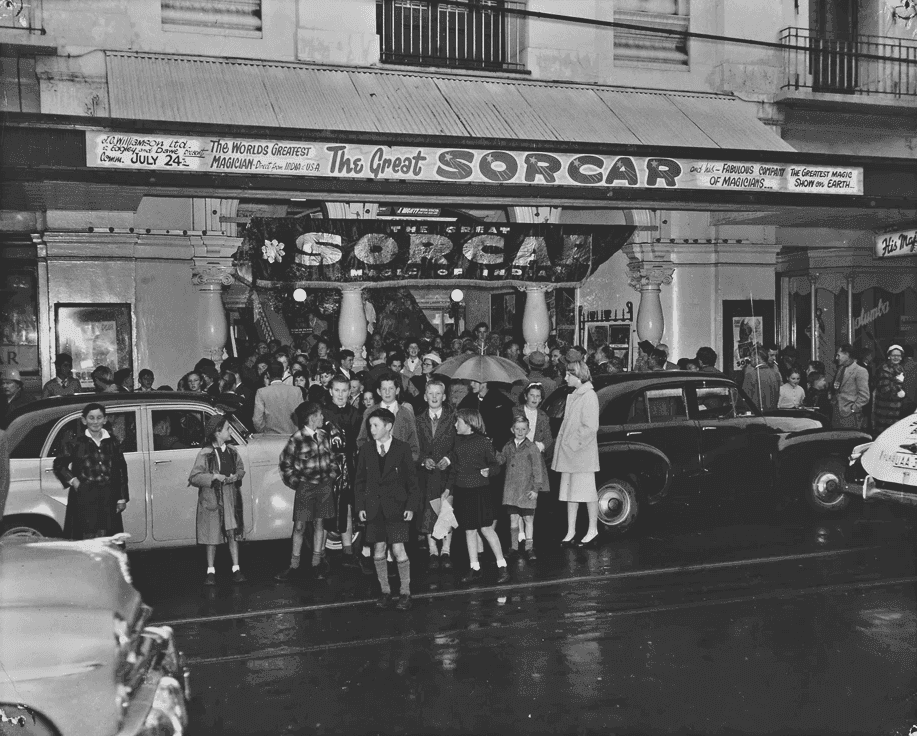
When independence came, Indian magic found its greatest champion in P.C. Sorcar. He changed his surname to sound closer to "sorcerer" and performed Indian magic on the biggest stages in the world, with Mughal sets, mandala ceremonies, and Rajput costumes, making sure everyone knew exactly where it came from.


An Indian magician was suddenly the most talked-about performer in britain. But Sorcar was an exception, not a turning point. The gap between what Indian magic could be and what it actually was for most of its practitioners never closed. If anything, after independence, it widened.

Contemporary (2000s)

Current

Era

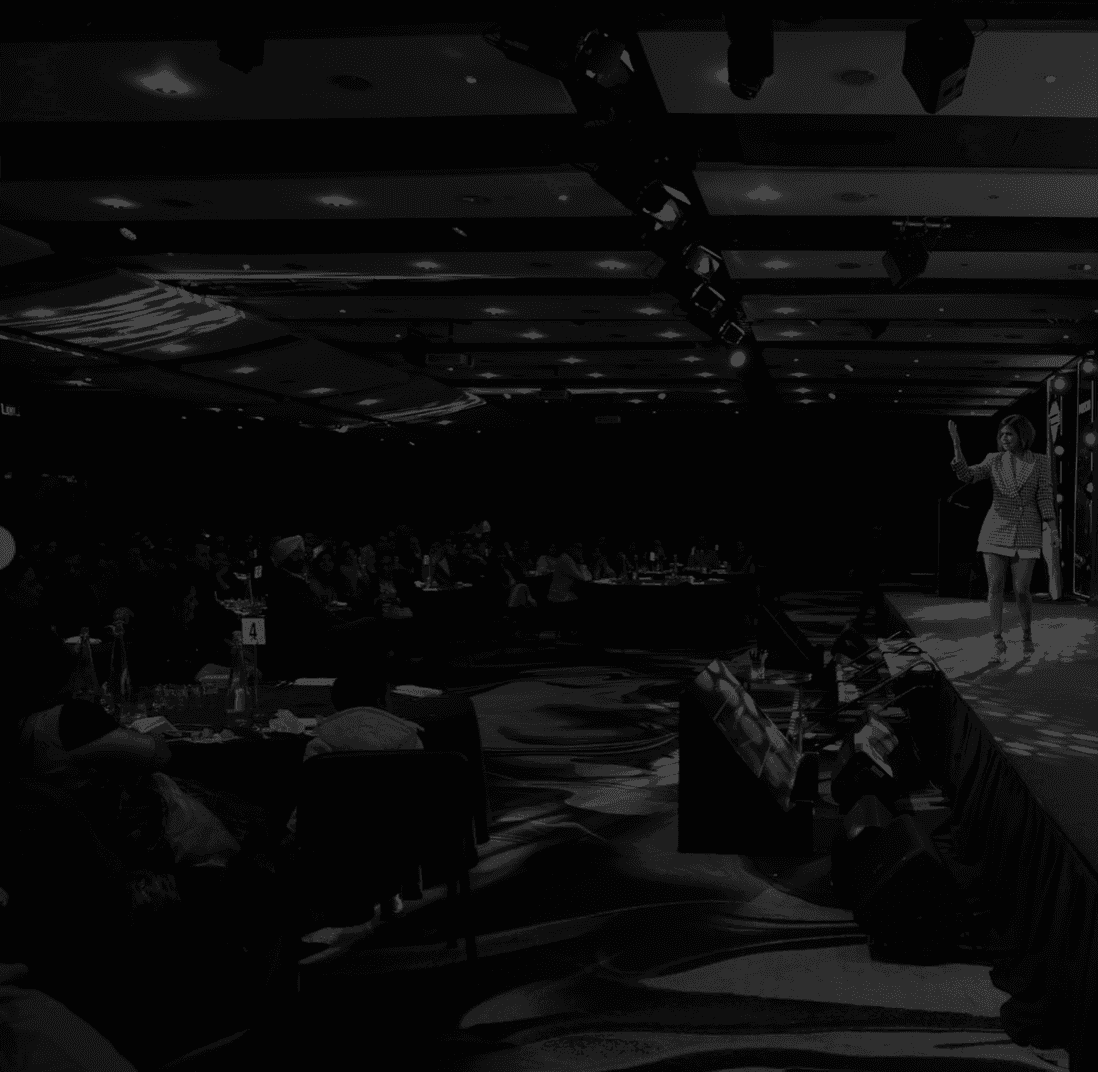
There's a strange contradiction at the heart of Indian magic right now. More people are watching it than ever before, and fewer people are performing it live than at any point in living memory. Magic turned out to be perfectly built for short-form content: a card trick fits in a reel, a mentalism reveal fits in a thumbnail.


But a screen is not a stage. The emotional weight is different. The memory it leaves is different. So the split widens, a handful of Indian magicians thrive online while thousands of jadoowallahs tell their children to find a different profession. The problem isn't a lack of talent, audience, or history. It's a lack of connection.

Vedic Era (~1500 BCE)

The Vedic Roots - Magic as Philosophy

Long before magic was entertainment, it was an idea. In the Vedic tradition, Maya described the fundamental illusion of the material world, the philosophical position that reality is layered, and what you perceive is not the whole picture.


Indra, king of the gods, was its first master, the weaver of the Indrajaal, literally "Indra's net", the web of illusion that held the universe together. The word eventually became the Sanskrit term for magic itself.

Mughal Era (~1600s)

Courts, Empires, and Patronage

Kautilya's Arthashastra, written around the 4th century BCE, recommends the use of magicians as spies. A magician could enter any space and nobody would suspect him. Magic was a tool of statecraft, sitting alongside diplomacy and warfare.


By the Mughal period, the relationship had shifted entirely. Jadoowallahs were no longer operatives, they were celebrated artists, patronised alongside poets and painters.

Colonial Era (1800s - 1947)

Colonial Wound &

The Decline

Everything changed the moment the British arrived. Their damage to Indian magic was perceptual. Western magicians stole freely from Indian jadoowallahs: Houdini performed as a "Hindu Fakir," Thurston travelled to India to study techniques he rebuilt.


Meanwhile, the britishers labelled entire jadoowallah communities as "criminal tribes", performers whose only crime was working on a street corner. This created a hierarchy that never fully disappeared. Western stage magic was framed as clever. Indian street magic was branded as primitive and superstitious.

Post Independence (1950s-90s)

Post-Colonial India

& PC Sorcar’s Legacy

When independence came, Indian magic found its greatest champion in P.C. Sorcar. He performed Indian magic on the biggest stages in the world, with Mughal sets, mandala ceremonies, and Rajput costumes, making sure everyone knew exactly where it came from.


An Indian magician was suddenly the most talked-about performer in britain. But Sorcar was an exception, not a turning point. The gap between what Indian magic could be and what it actually was for most of its practitioners never closed.

Contemporary (2000s)

Current

Era

There's a strange contradiction at the heart of Indian magic right now. More people are watching it than ever before, and fewer people are performing it live than at any point in living memory. Magic turned out to be perfectly built for short-form content.


But a screen is not a stage. The emotional weight is different. The memory it leaves is different. So the split widens, a handful of Indian magicians thrive online while thousands of jadoowallahs tell their children to find a different profession.

Primary

Research

Primary

Research

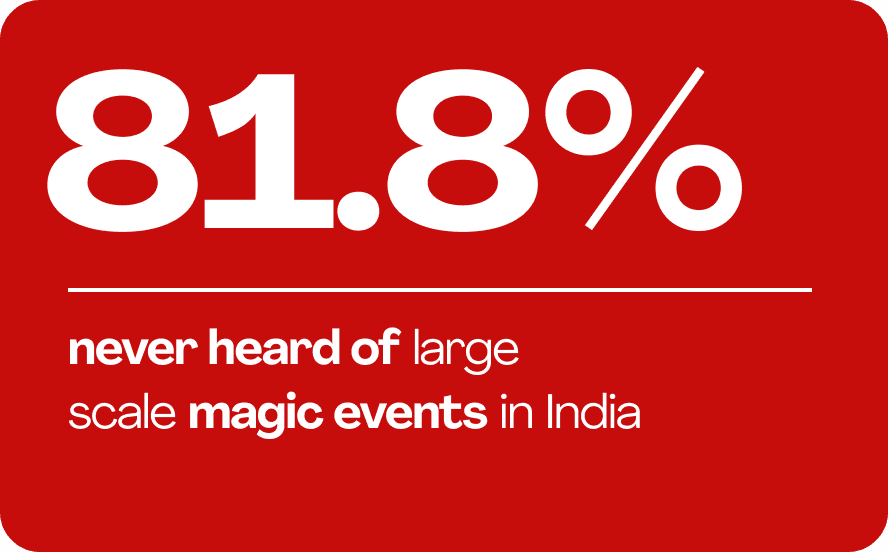
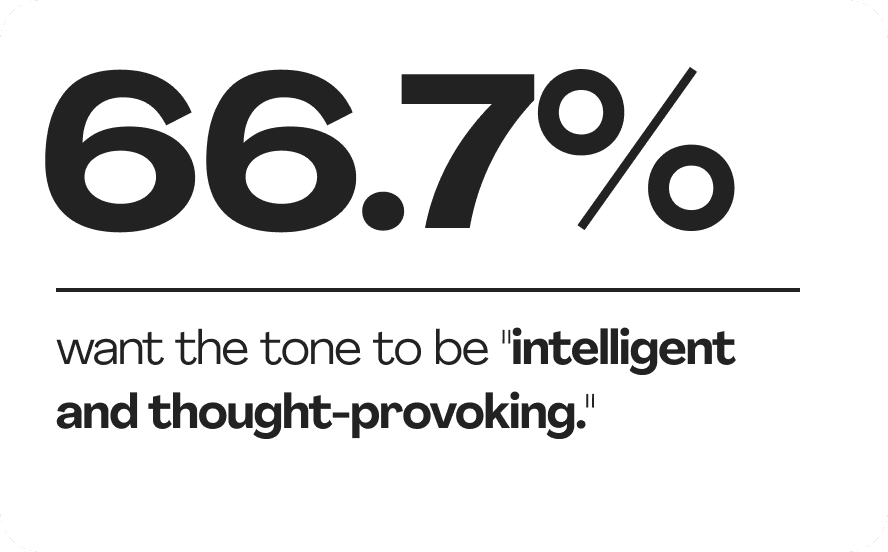
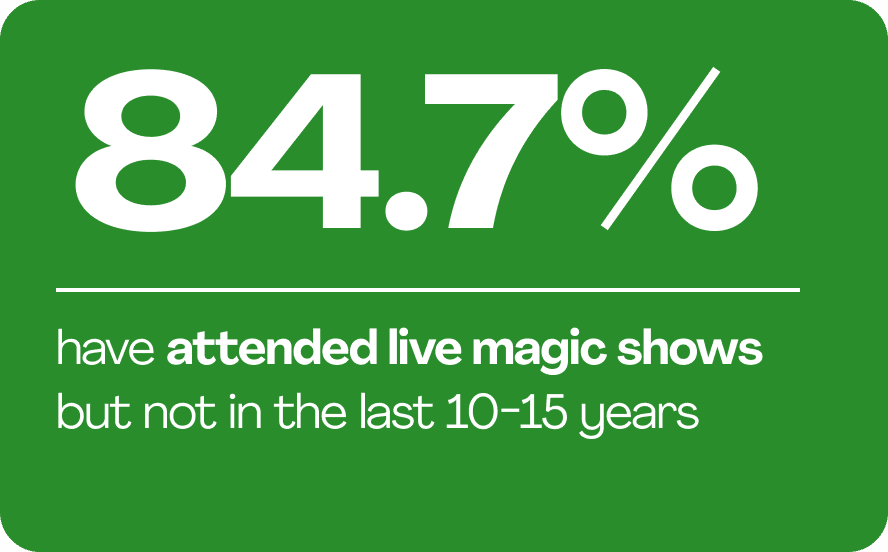
Before designing anything, I needed to know whether my assumptions about Indian audiences were actually true. I built a survey of around 16 questions covering four areas: current behaviour, perception, emotional memory, and appetite for a large-scale magic event. The responses confirmed what the secondary research had suggested and in some cases, went further. The numbers below tell the story.

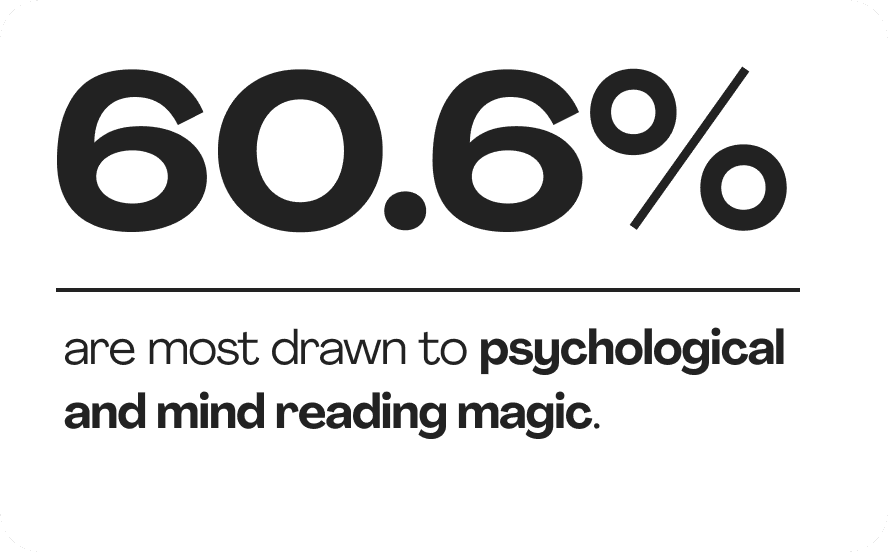
Before designing anything, I needed to know whether my assumptions about Indian audiences were actually true. I built a survey of around 16 questions covering four areas: current behaviour, perception, emotional memory, and appetite for a large-scale magic event. The responses confirmed what the secondary research had suggested and in some cases, went further. The numbers below tell the story.
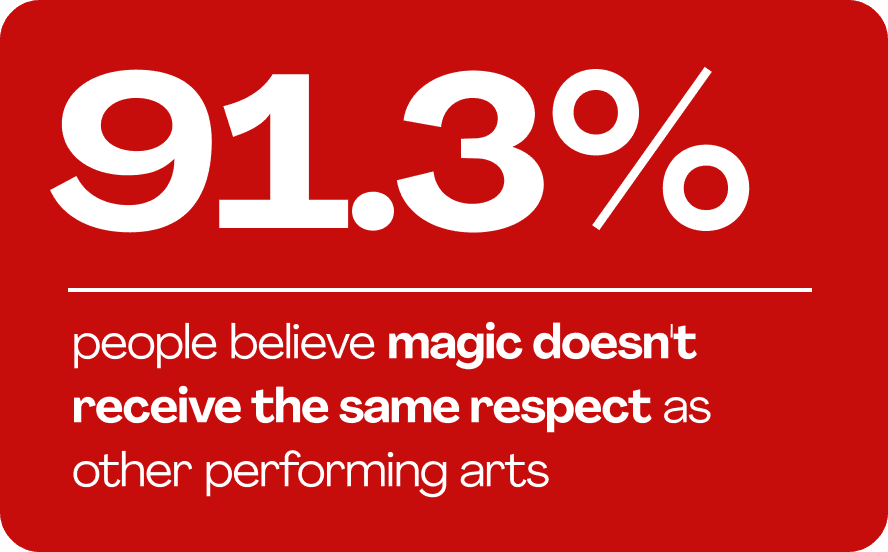
Before designing anything, I needed to know whether my assumptions about Indian audiences were actually true. I built a survey of around 16 questions covering four areas: current behaviour, perception, emotional memory, and appetite for a large-scale magic event. The responses confirmed what the secondary research had suggested and in some cases, went further. The numbers below tell the story.
Competitor Analysis

Competitor Analysis

Hover your cursor over the cards ;)

Tap the cards ;)

Tap the cards ;)

Before designing an event that revives Indian magic, it was important to study what already exists. What are the dominant formats for magic events globally? Who do they serve? What do they consistently do well, and what do they leave out?

Before designing an event that revives Indian magic, it was important to study what already exists. What are the dominant formats for magic events globally? Who do they serve? What do they consistently do well, and what do they leave out?

FISM

The most prestigious magic event in the world, the Olympics of the craft, held every three years across six days, with magicians competing from over 50 countries. It proves magic can be treated with institutional seriousness. But it is a closed world, built by magicians, for magicians, with no cultural framing and no civilian audience in the room.

FISM

The most prestigious magic event in the world, the Olympics of the craft, held every three years across six days, with magicians competing from over 50 countries. It proves magic can be treated with institutional seriousness. But it is a closed world, built by magicians, for magicians, with no cultural framing and no civilian audience in the room.

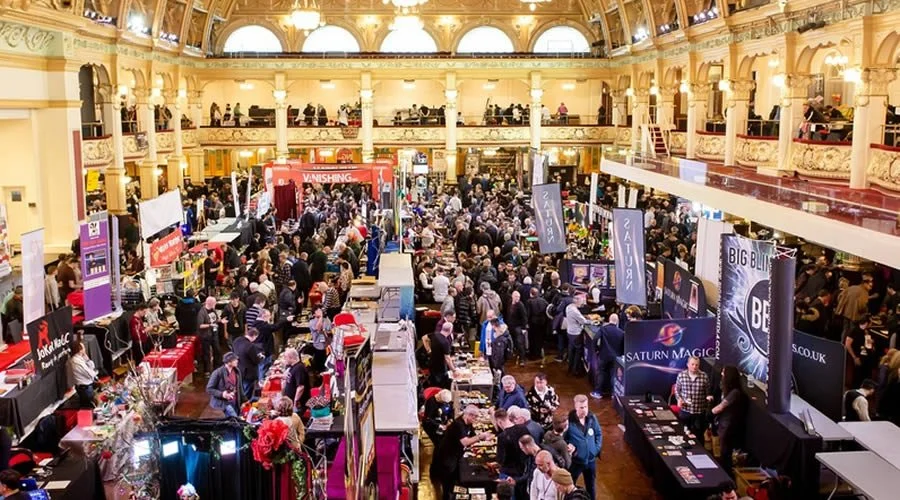
Blackpool Magic Convention

The largest magic convention in the world, held annually since 1947 in England. Over 3,500 delegates, 200 dealers, and nearly every major name in modern magic. The gold standard for a magic convention, but entirely industry-facing. A civilian walking in would be the only person in the room who isn't already a magician.

Blackpool Magic Convention

The largest magic convention in the world, held annually since 1947 in England. Over 3,500 delegates, 200 dealers, and nearly every major name in modern magic. The gold standard for a magic convention, but entirely industry-facing. A civilian walking in would be the only person in the room who isn't already a magician.

MagiFest

America's oldest continuously running magic convention, founded in 1931. Known for its intimate scale, late-night jam sessions, and a youth mentorship programme that invests in the next generation. But like its peers, it exists entirely within the magic community, with no cultural identity beyond the craft itself.

MagiFest

America's oldest continuously running magic convention, founded in 1931. Known for its intimate scale, late-night jam sessions, and a youth mentorship programme that invests in the next generation. But like its peers, it exists entirely within the magic community, with no cultural identity beyond the craft itself.

CardMaCon

India's first organised cardistry and card magic convention, founded in 2019. A genuine milestone, proving that a well-produced magic event can find its audience in India. But its focus remains narrow: Western-influenced card magic, built for enthusiasts, with no engagement with India's own magic heritage.

CardMaCon

India's first organised cardistry and card magic convention, founded in 2019. A genuine milestone, proving that a well-produced magic event can find its audience in India. But its focus remains narrow: Western-influenced card magic, built for enthusiasts, with no engagement with India's own magic heritage.

Magicon

A regional magic convention held annually in Pune, featuring competitions, lectures, and a dealers' room. It keeps the Indian magic community alive, but exists almost entirely within itself. A general audience in Pune is unlikely to know it's happening.

Magicon

A regional magic convention held annually in Pune, featuring competitions, lectures, and a dealers' room. It keeps the Indian magic community alive, but exists almost entirely within itself. A general audience in Pune is unlikely to know it's happening.

No existing event does all three things at once:


  • open to the public,

  • rooted in Indian heritage, and

  • designed at a scale and production quality that can revive a tradition.


That is the gap.

That is where our event begins.

No existing event does all three things at once:


  • open to the public,

  • rooted in Indian heritage, and

  • designed at a scale and production quality that can revive a tradition.


That is the gap.

That is where our event begins.

Design

Design

Design

Once the gap was clear, the first instinct was to start designing. But before any visual were designed, I needed to know what this event actually stood for. The nomeclature, brand's mission, and tone of voice came first because every design decision that followed would need something to answer to.

Once the gap was clear, the first instinct was to start designing. But before any visual were designed, I needed to know what this event actually stood for. The nomeclature, brand's mission, and tone of voice came first because every design decision that followed would need something to answer to.

.

Brand house

Brand house

Brand house

JaaduNama

JaaduNama

JaaduNama

Our

Beliefs

Indian magic is a long-standing cultural art form / deeply rooted, indian performing act that deserves renewed recognition and a meaningful platform.

Indian magic is a long-standing cultural art form / deeply rooted, indian performing act that deserves renewed recognition and a meaningful platform.

Indian magic is a long-standing cultural art form / deeply rooted, indian performing act that deserves renewed recognition and a meaningful platform.

Our

Promise

To create a rich, immersive experience that brings
India’s magic heritage to life through a contemporary lens

To create a rich, immersive experience that brings
India’s magic heritage to life through a contemporary lens

To create a rich, immersive experience that brings
India’s magic heritage to life through a contemporary lens

Rational

Benefits

High-quality, curated live magic performances

High-quality, curated live magic performances

High-quality, curated live magic performances

Immersive and seamless event experiences

Immersive and seamless event experiences

Immersive and seamless event experiences

Exposure to India’s lesser-known cultural art forms

Exposure to India’s lesser-known cultural art forms

Exposure to India’s lesser-known cultural art forms

Emotional

Benefits

A refreshing escape from routine

A refreshing escape from routine

A refreshing escape from routine

Collective joy and shared amazement with others

Collective joy and shared amazement with others

Collective joy and shared amazement with others

A sense of connection with India’s cultural heritage

A sense of connection with India’s cultural heritage

A sense of connection with India’s cultural heritage

Our

Values

Wonder and Curiosity

Wonder and Curiosity

Wonder and Curiosity

Craft and Mastery

Craft and Mastery

Craft and Mastery

Cultural Intergrity

Cultural Intergrity

Cultural Intergrity

Contemporary Relevance

Contemporary Relevance

Contemporary Relevance

Mission

Mission

To create a contemporary platform that revives and reimagines Indias magic tradition - bringing together performers, audiences, and cultural heritage in a shared experience that showcases magic as a serious performing art.

To create a contemporary platform that revives and reimagines Indias magic tradition - bringing together performers, audiences, and cultural heritage in a shared experience that showcases magic as a serious performing art.

Vision

Vision

A future where Indian magic is widely celebrated and experienced, becoming a mainstream source of joy, wonder, and escape for audiences, much like concerts, theatre, and dance, while proudly carrying forward its cultural legacy.

A future where Indian magic is widely celebrated and experienced, becoming a mainstream source of joy, wonder, and escape for audiences, much like concerts, theatre, and dance, while proudly carrying forward its cultural legacy.

Purpose

Purpose

To restore recognition and relevance to Indias rich magic heritage by presenting it in a modern, engaging way that preserves tradition while reconnecting people with the wonder of live performance.

To restore recognition and relevance to Indias rich magic heritage by presenting it in a modern, engaging way that preserves tradition while reconnecting people with the wonder of live performance.

Tone of Voice
Expressive
Lowkey
Universal
Cultural
Personal
Collective
Serious
Quirky
Observational
Participatory
Mainstream
Niche
Tone of Voice
Expressive
Lowkey
Universal
Cultural
Personal
Collective
Serious
Quirky
Observational
Participatory
Mainstream
Niche
Tone of Voice
Expressive
Lowkey
Universal
Cultural
Personal
Collective
Serious
Quirky
Observational
Participatory
Mainstream
Niche

Moodboard

Moodboard

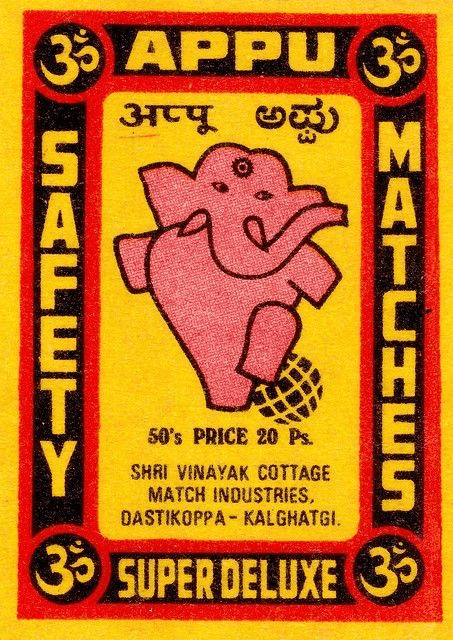
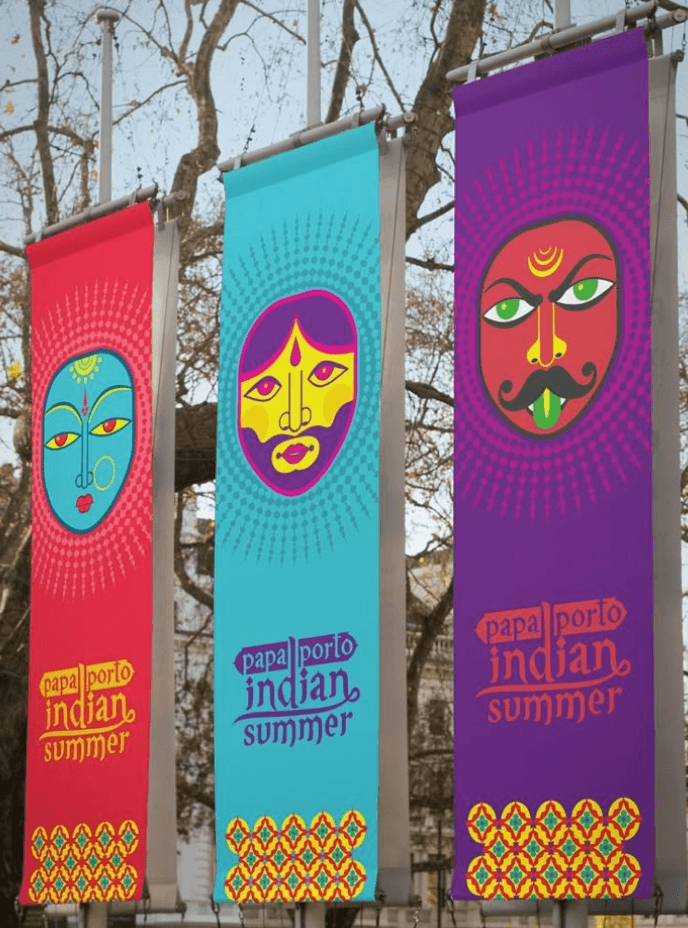
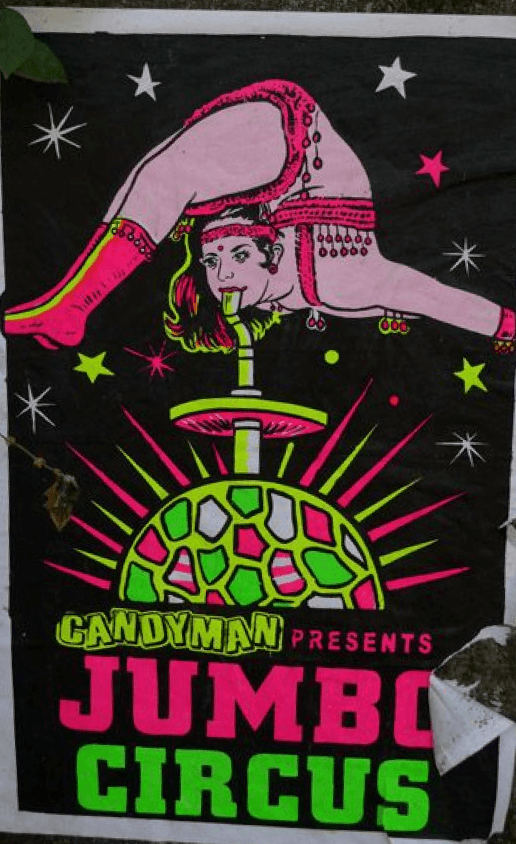
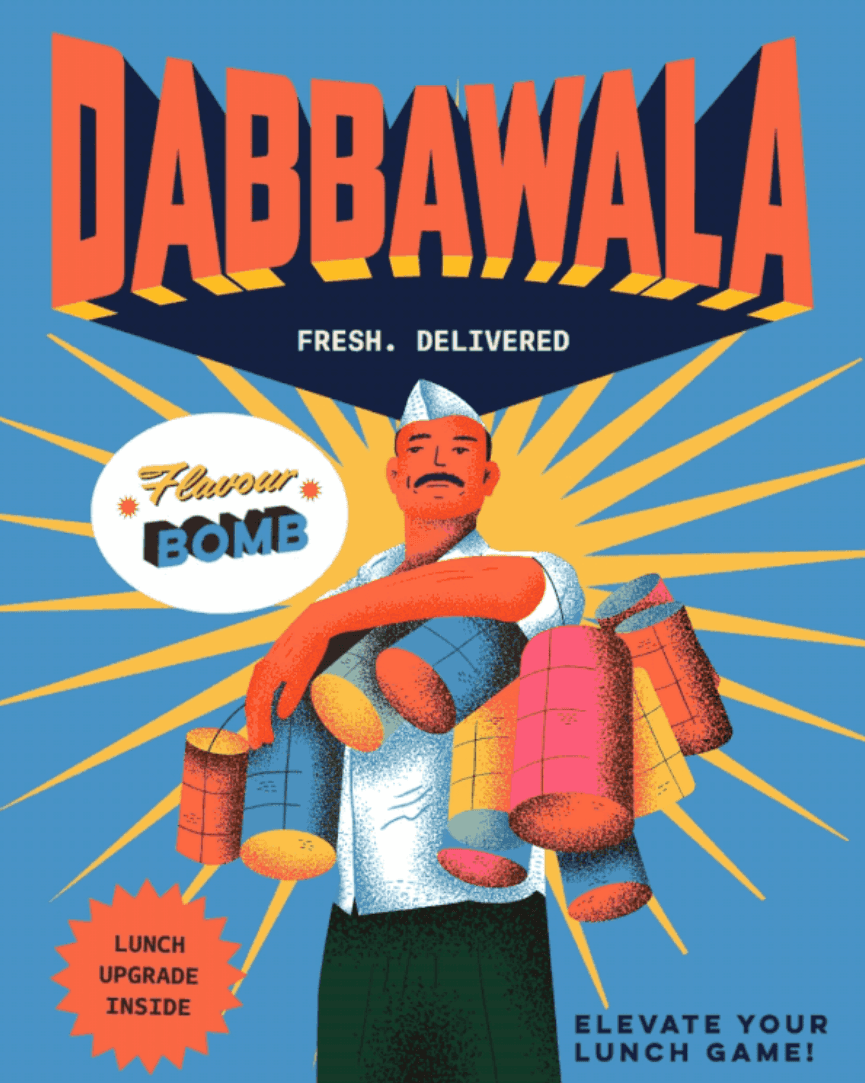
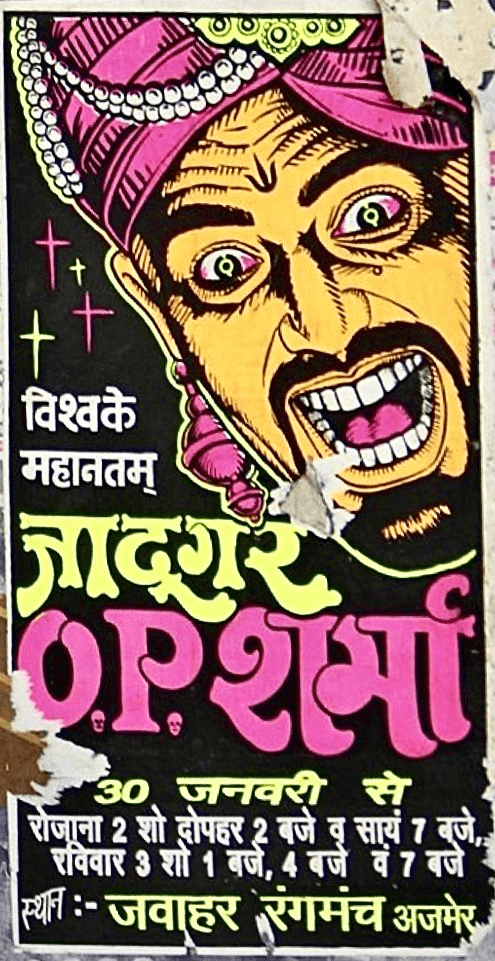
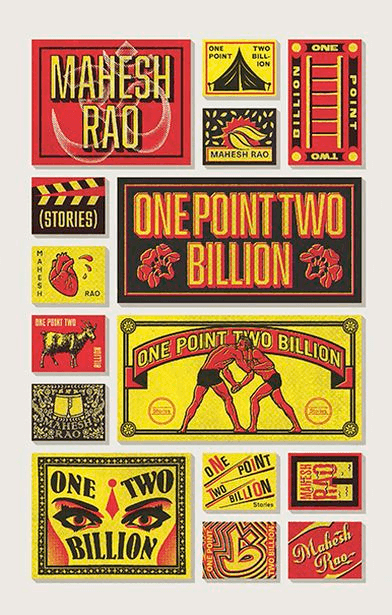
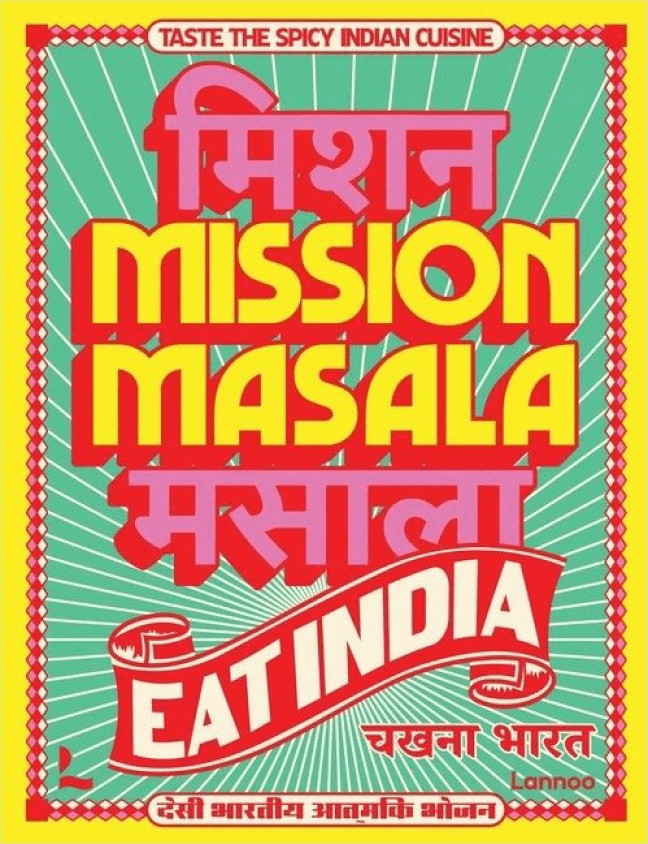
The moodboard pulls from the graphic traditions that live on the streets, shops, and highways of India. Matchbox covers, circus posters, hand-painted signage, and truck art, visual languages that carry a lot of personality and boldness. What connects all of these references is a shared quality of unapologetic loudness.

The moodboard pulls from the graphic traditions that live on the streets, shops, and highways of India. Matchbox covers, circus posters, hand-painted signage, and truck art, visual languages that carry a lot of personality and boldness. What connects all of these references is a shared quality of unapologetic loudness.

The moodboard pulls from the graphic traditions that live on the streets, shops, and highways of India. Matchbox covers, circus posters, hand-painted signage, and truck art, visual languages that carry a lot of personality and boldness. What connects all of these references is a shared quality of unapologetic loudness.

Systems

Design

Systems

Design

The brand patterns draw from optical illusions and classic magic show graphics, visual languages that feel simultaneously familiar and disorienting, which is exactly what magic does. The borders take their cues from Indian circus posters and hand-painted theatre signage, carrying the same unapologetic boldness.


Assigning each pattern and border a specific role, a functional component across the event ecosystem means that even without a logo in sight, a JaaduNama poster, schedule, or social post is immediately recognisable. The system builds visual memory.

The brand patterns draw from optical illusions and classic magic show graphics, visual languages that feel simultaneously familiar and disorienting, which is exactly what magic does. The borders take their cues from Indian circus posters and hand-painted theatre signage, carrying the same unapologetic boldness.


Assigning each pattern and border a specific role, a functional component across the event ecosystem means that even without a logo in sight, a JaaduNama poster, schedule, or social post is immediately recognisable. The system builds visual memory.
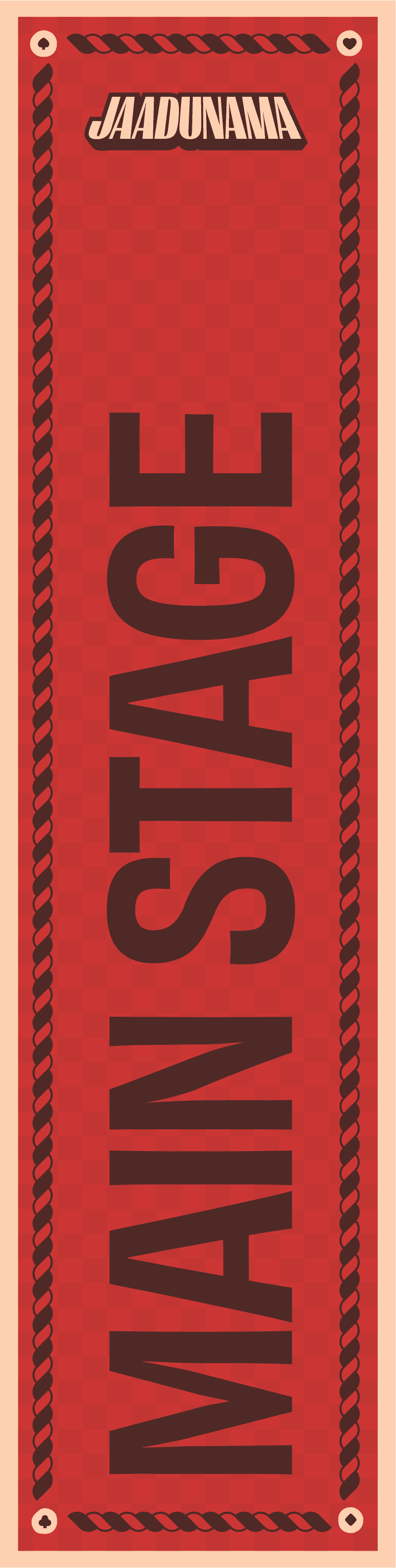
The brand patterns draw from optical illusions and classic magic show graphics, visual languages that feel simultaneously familiar and disorienting, which is exactly what magic does. The borders take their cues from Indian circus posters and hand-painted theatre signage, carrying the same unapologetic boldness.


Assigning each pattern and border a specific role, a functional component across the event ecosystem means that even without a logo in sight, a JaaduNama poster, schedule, or social post is immediately recognisable. The system builds visual memory.

Collateral Backgrounds

Collateral Backgrounds

For Performers

For Performers

For In-Event Collaterals

For In-Event Collaterals

For Social Media

For Social Media

For Announcements

For Announcements

Collateral Borders

Collateral Borders

For Performers

For Performers

For In-Event Collaterals

For In-Event Collaterals

For Visual Heavy Collaterals

For Visual Heavy Collaterals

For Announcements

For Announcements

Execution

Execution

Execution

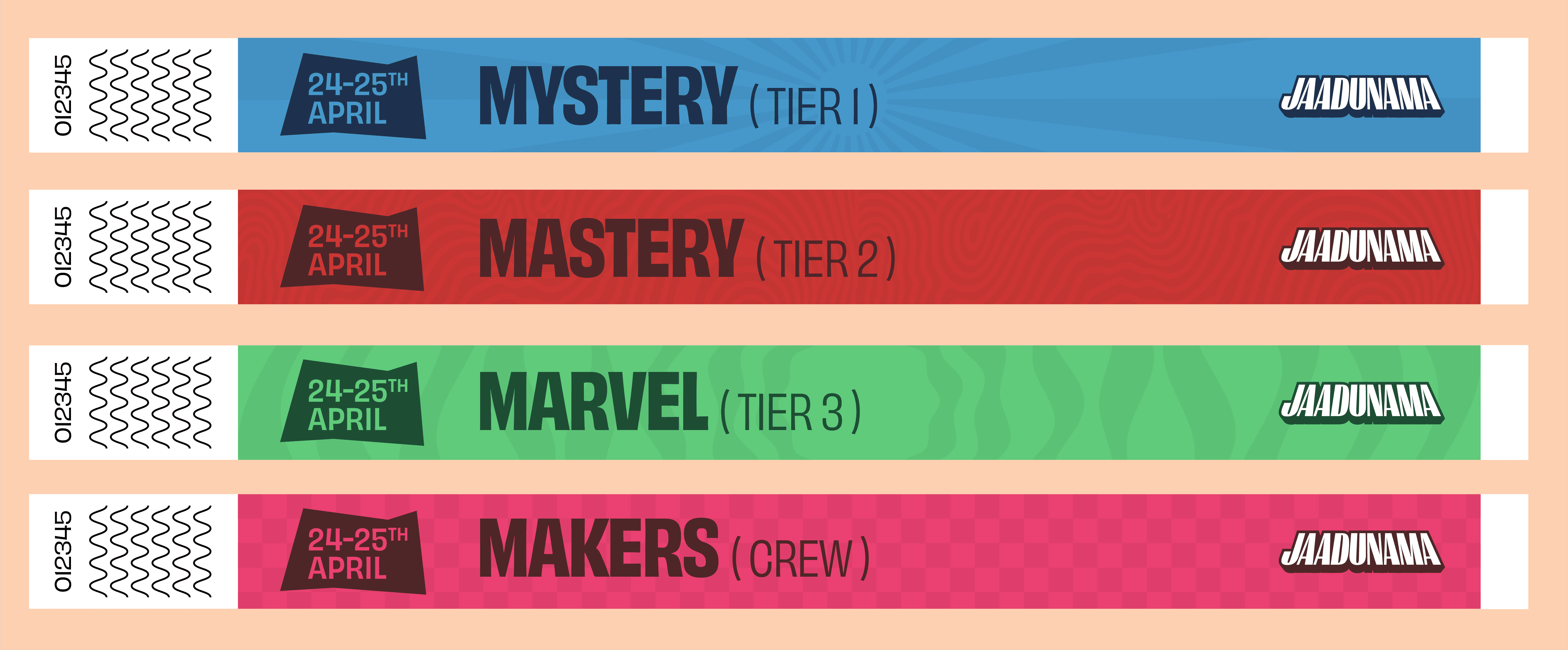
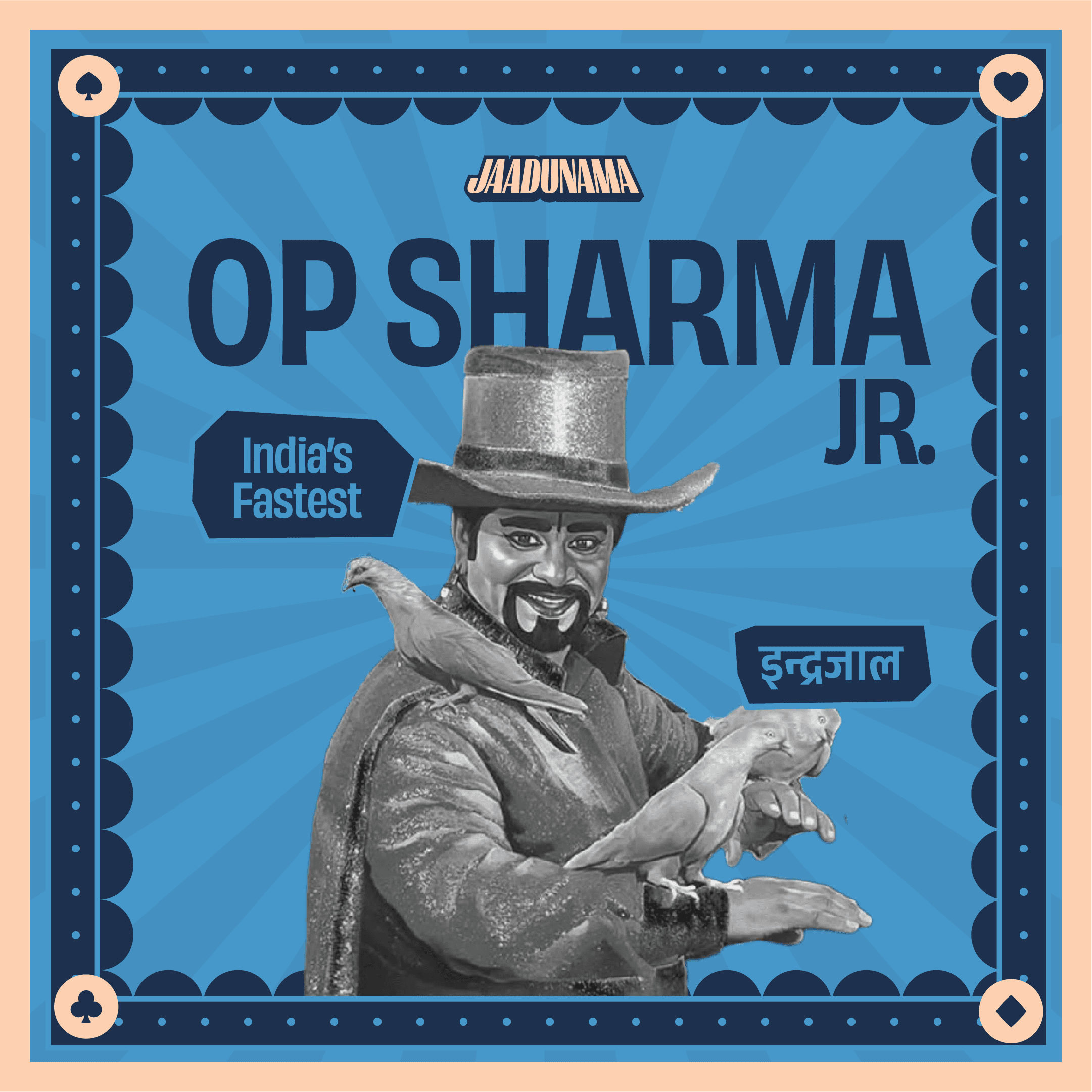
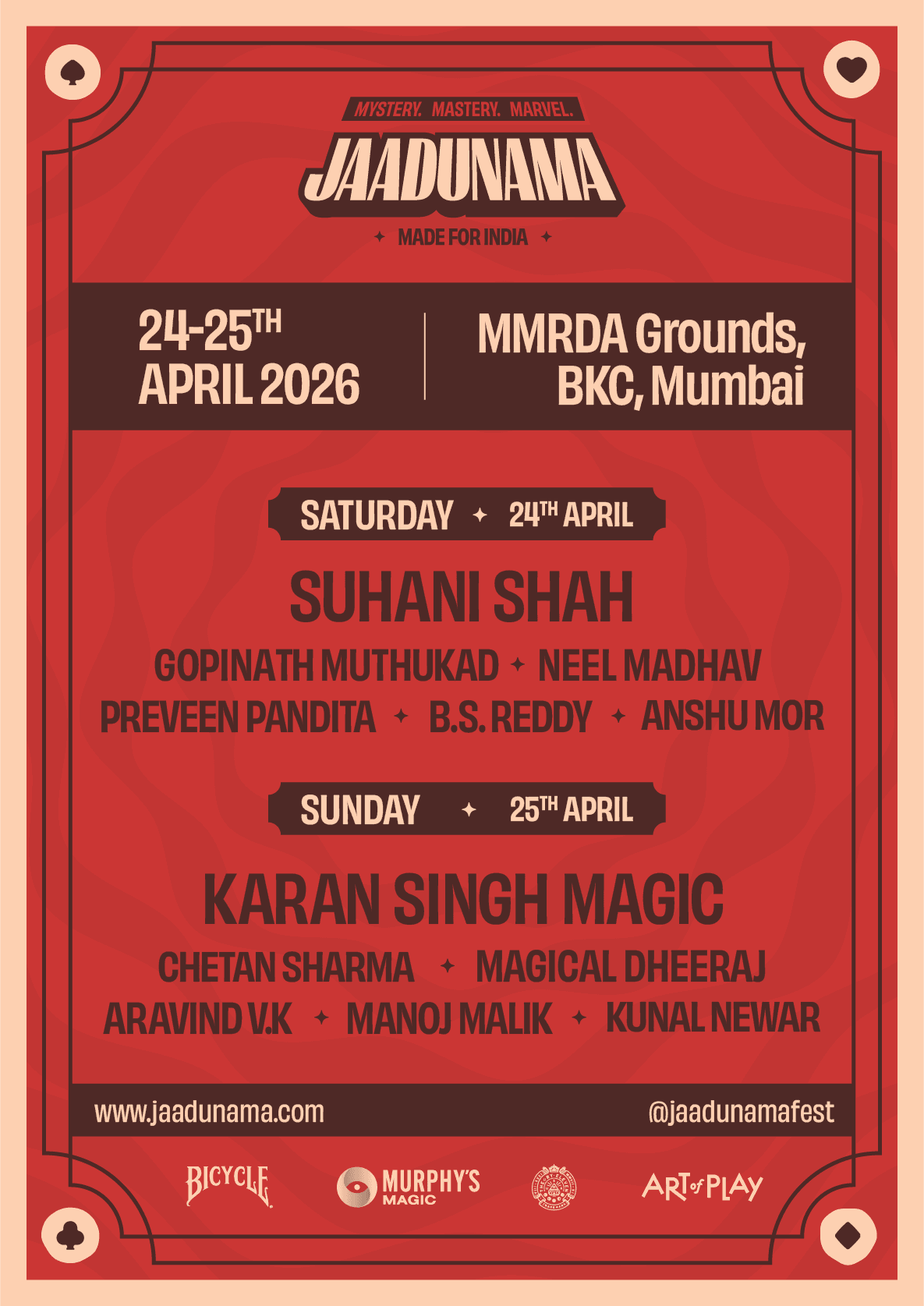
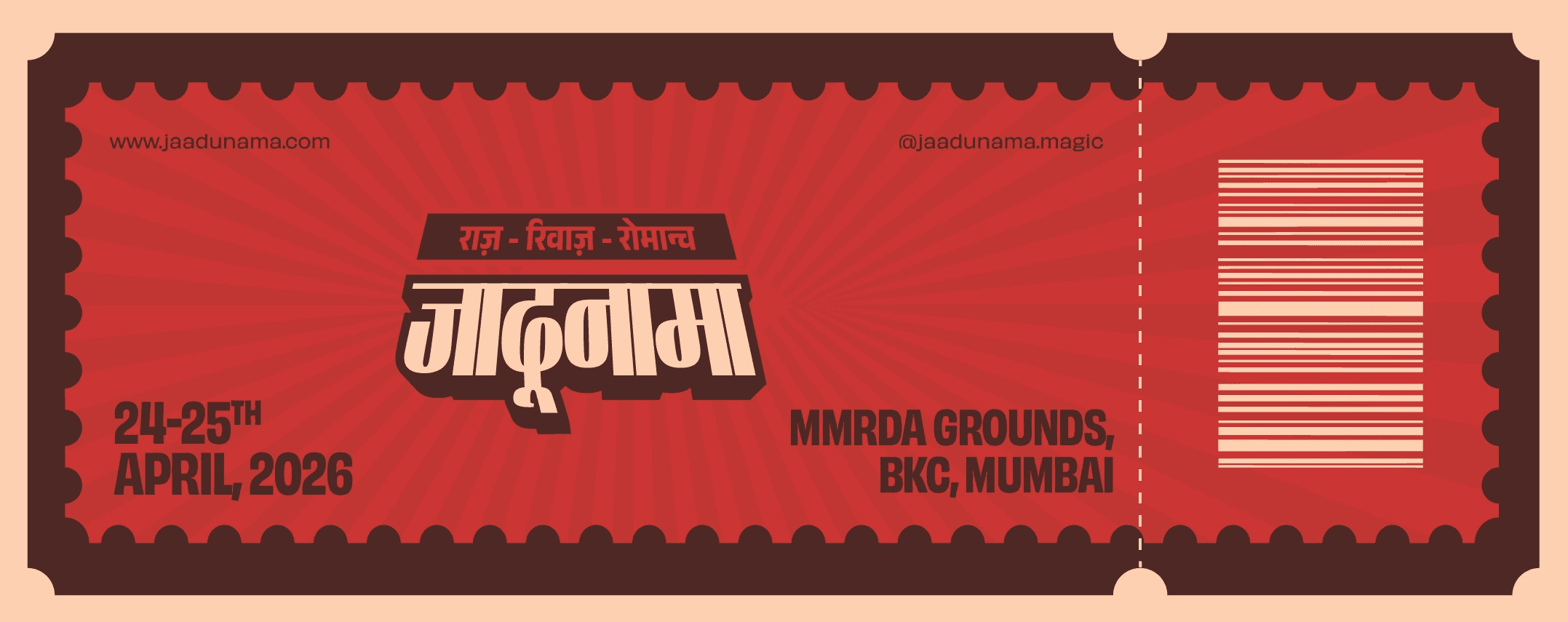
With the brand system in place, the execution phase was about pressure-testing it across every surface the event would actually touch. Ticketing tiers, performer posts, wayfinding flags, wristbands, promotional posters, each piece had to work on its own and feel unmistakably part of the same world.
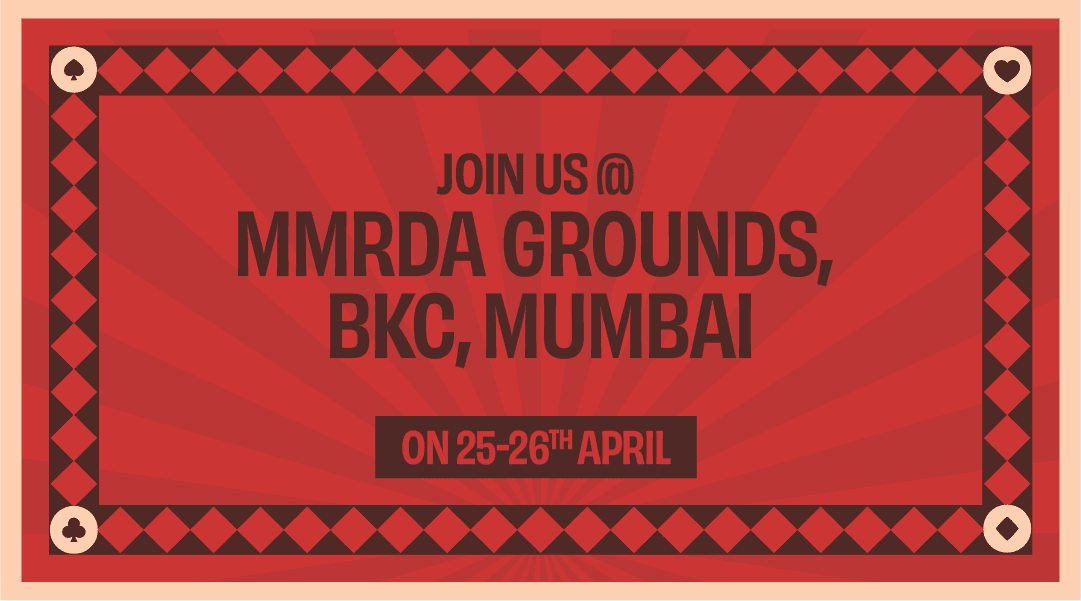
With the brand system in place, the execution phase was about pressure-testing it across every surface the event would actually touch. Ticketing tiers, performer posts, wayfinding flags, wristbands, promotional posters, each piece had to work on its own and feel unmistakably part of the same world.

Aasmani

Neela

Aasmani

Neela

Aasmani

Neela

Hex: #4698CB

RGB: 70 152 203

CMYK: 70 28 5 0

Hex: #4698CB

RGB: 70 152 203

CMYK: 70 28 5 0

Hex: #4698CB

RGB: 70 152 203

CMYK: 70 28 5 0

Ratri

Neela

Ratri

Neela

Ratri

Neela

Hex: #1D314E

RGB: 29 49 78

CMYK: 94 80 43 39

Hex: #1D314E

RGB: 29 49 78

CMYK: 94 80 43 39

Hex: #1D314E

RGB: 29 49 78

CMYK: 94 80 43 39

Tamasha

Laal

Tamasha

Laal

Tamasha

Laal

Hex: #CB3634

RGB: 203 54 52

CMYK: 14 93 87 4

Hex: #CB3634

RGB: 203 54 52

CMYK: 14 93 87 4

Hex: #CB3634

RGB: 203 54 52

CMYK: 14 93 87 4

Parda

Laal

Parda

Laal

Parda

Laal

Hex: #4E2926

RGB: 78 41 38

CMYK: 46 76 50 79

Hex: #4E2926

RGB: 78 41 38

CMYK: 46 76 50 79

Hex: #4E2926

RGB: 78 41 38

CMYK: 46 76 50 79

Bazaar

Green

Bazaar

Green

Bazaar

Green

Hex: #60CB7A

RGB: 96 203 122

CMYK: 60 0 71 0

Hex: #60CB7A

RGB: 96 203 122

CMYK: 60 0 71 0

Hex: #60CB7A

RGB: 96 203 122

CMYK: 60 0 71 0

Junglee

Green

Junglee

Green

Junglee

Green

Hex: #1D4E33

RGB: 29 78 51

CMYK: 84 42 100 45

Hex: #1D4E33

RGB: 29 78 51

CMYK: 84 42 100 45

Hex: #1D4E33

RGB: 29 78 51

CMYK: 84 42 100 45

Circus

Pink

Circus

Pink

Circus

Pink

Hex: #EA4072

RGB: 234 64 114

CMYK: 1 90 33 0

Hex: #EA4072

RGB: 234 64 114

CMYK: 1 90 33 0

Hex: #EA4072

RGB: 234 64 114

CMYK: 1 90 33 0

Wine

Pink

Wine

Pink

Wine

Pink

Hex: #4E2628

RGB: 78 38 40

CMYK: 46 78 67 59

Hex: #4E2628

RGB: 78 38 40

CMYK: 46 78 67 59

Hex: #4E2628

RGB: 78 38 40

CMYK: 46 78 67 59

Chandan

Beige

Chandan

Beige

Chandan

Beige

Hex: #FDD0B1

RGB: 253 208 117

CMYK: 0 29 27 0

Hex: #FDD0B1

RGB: 253 208 117

CMYK: 0 29 27 0

Hex: #FDD0B1

RGB: 253 208 117

CMYK: 0 29 27 0

Kaala

Teeka

Kaala

Teeka

Kaala

Teeka

Hex: #231F1C

RGB: 35 31 28

CMYK: 68 66 68 75

Hex: #231F1C

RGB: 35 31 28

CMYK: 68 66 68 75

Hex: #231F1C

RGB: 35 31 28

CMYK: 68 66 68 75

Conclusion

Conclusion

Conclusion

During this project, I realised I had been trying to answer a question I'd carried since I was twelve, why does something that gave me so much joy exist almost entirely in the dark? The research was the part that changed me most. I expected to find a declining art form. I didn't expect to find a stolen one. If I could do one thing differently, it would be to have spoken more to the jadoowallahs. People who have done this their whole life and watched the world stop caring. That absence sits with me.

During this project, I realised I had been trying to answer a question I'd carried since I was twelve, why does something that gave me so much joy exist almost entirely in the dark? The research was the part that changed me most. I expected to find a declining art form. I didn't expect to find a stolen one. If I could do one thing differently, it would be to have spoken more to the jadoowallahs. People who have done this their whole life and watched the world stop caring. That absence sits with me.